
Want vibrant, detailed designs on your custom clothes? Here’s how DTF printing makes it possible, and when another method might suit you better.
If you’ve ever wanted to bring a bold, colourful idea to life on fabric, whether it’s a t-shirt for an event, hoodies for your team or promotional wear for your brand, you’ve probably come across a few printing methods. One of the newest is DTF printing. Short for Direct-to-Film, it took off in the early 2020s and is now a favourite for businesses, designers and anyone who wants sharp, full-colour prints without big set-up costs.
This guide explains how DTF works, where it shines, where it doesn’t, and how to get the best results for your products.
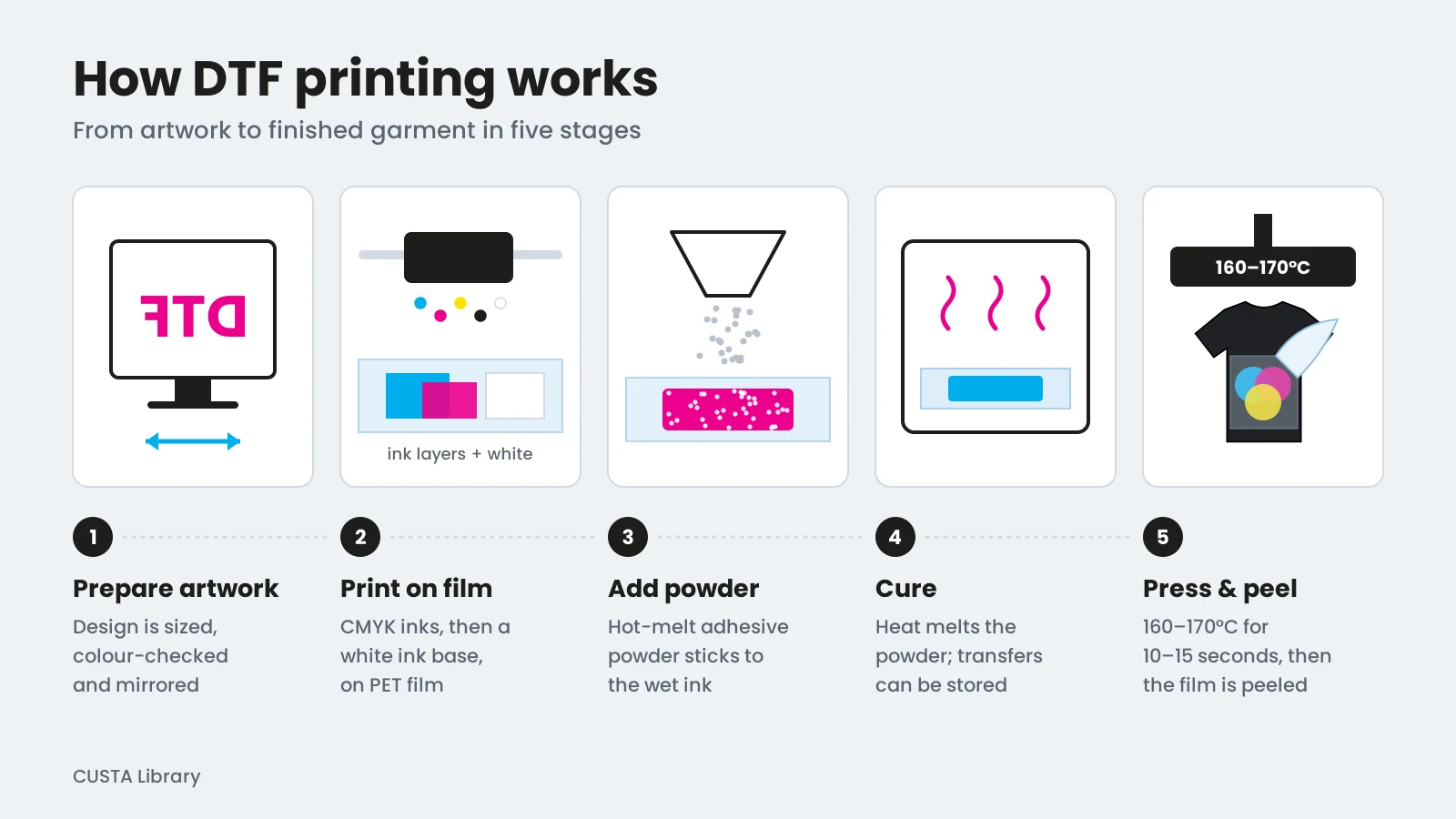
DTF printing transfers a design onto fabric using a special film. Your artwork is printed onto a clear PET film, coated with an adhesive powder and then heat-pressed onto the garment. Once the film is peeled away, the design stays bonded to the surface of the fabric.
Because the printing happens on film rather than on the garment itself, the same transfer can go onto cotton, polyester or blends, light or dark, without the fabric pre-treatment that direct-to-garment (DTG) printing needs.
You may also see it called “DTF heat transfer”. It is a type of heat transfer, but it is different from older vinyl and transfer-paper methods, which tend to feel stiffer and wear out sooner.
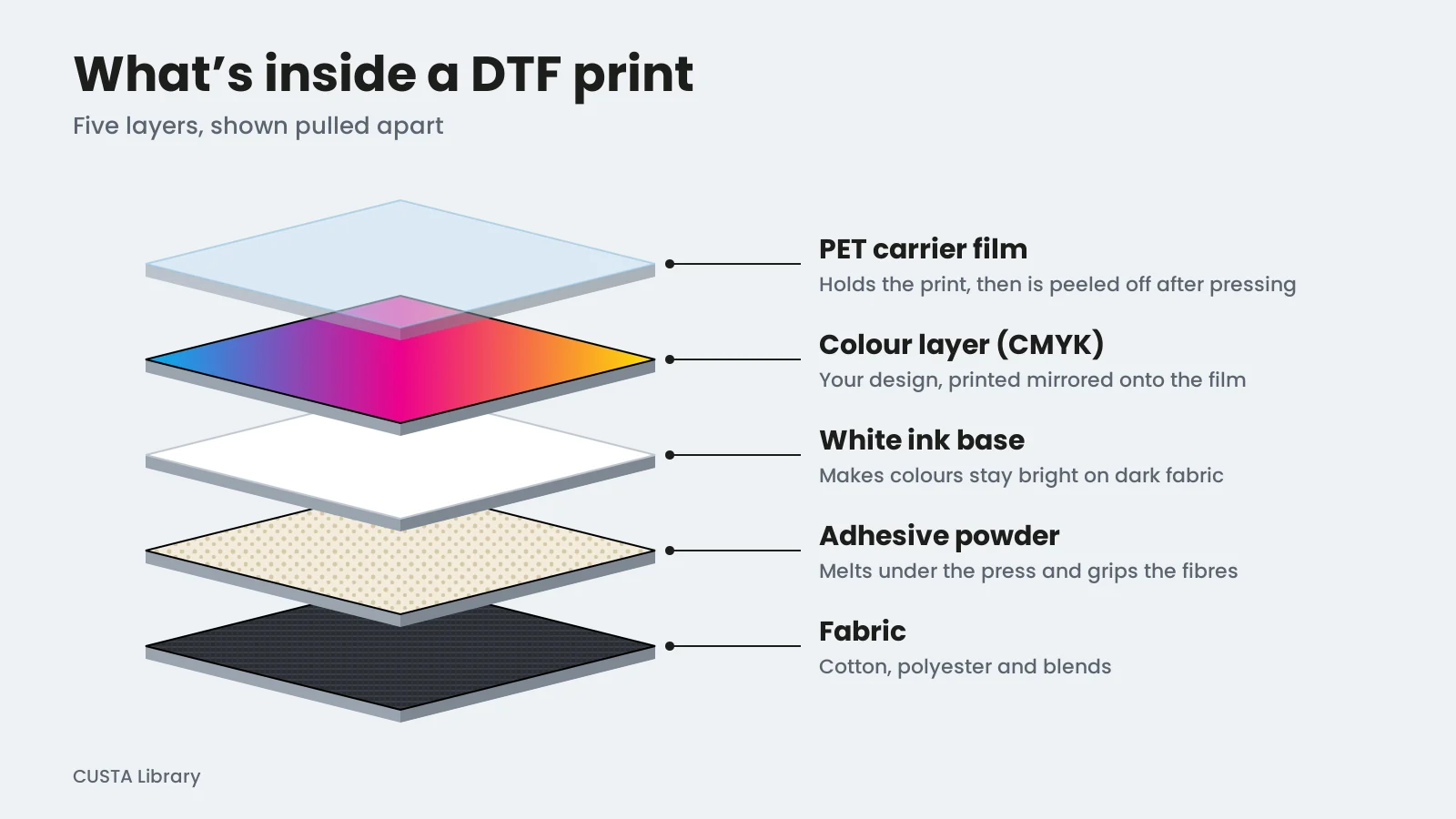
A finished DTF print is a thin, layered film bonded to the fabric: the colour layer on top, the white ink base beneath it and the adhesive that grips the fibres. That build is why DTF looks so vivid on dark garments, and also why it feels slightly smoother than the fabric around it.
Most of these are easy to plan around. If you’re unsure which method fits your design, our team can recommend one.
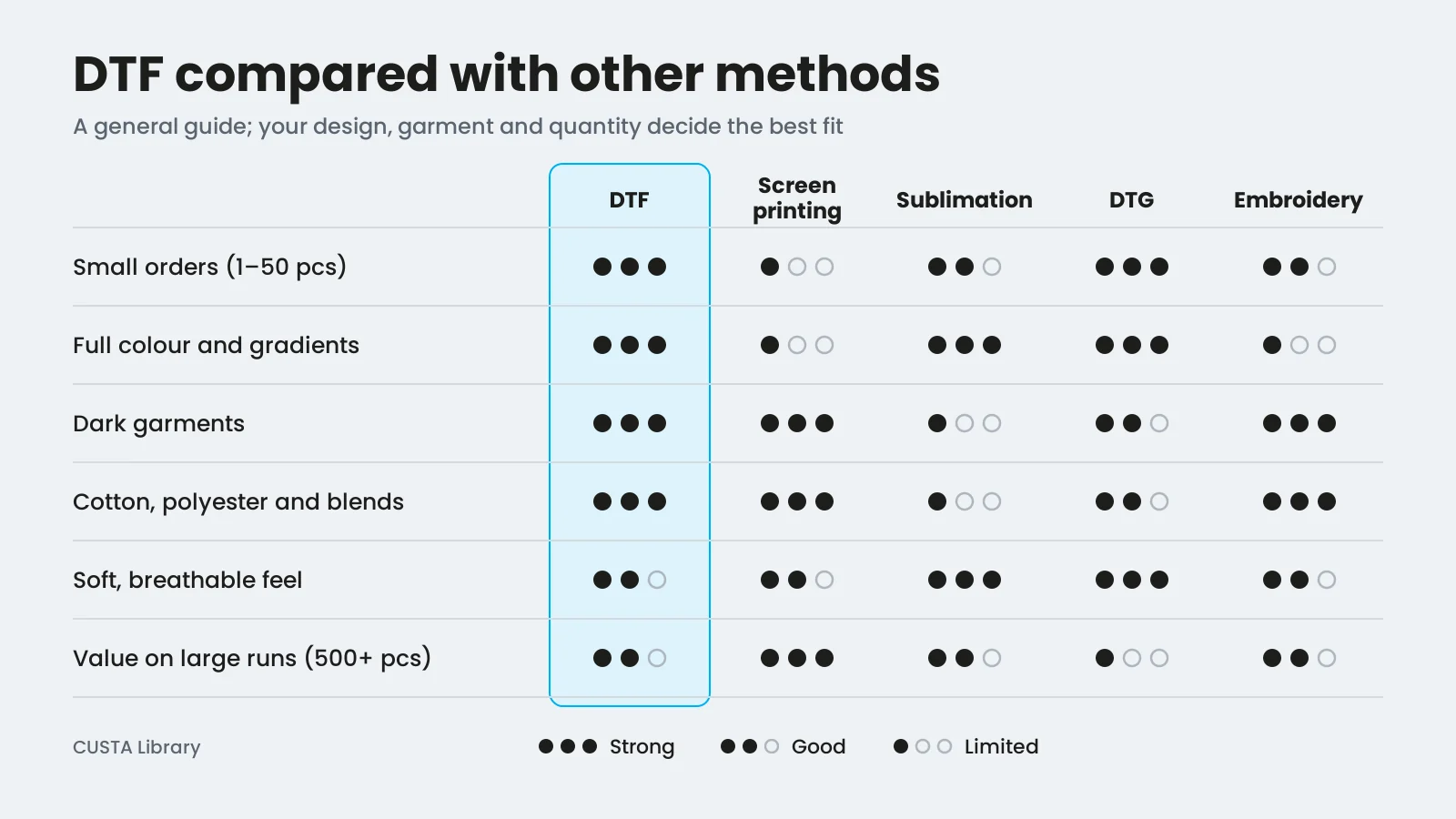
DTF vs screen printing: The two work well together rather than competing. Screen printing wins on price for large orders of simple designs, while DTF handles fine detail, gradients and short runs without screen set-up.
DTF vs sublimation: Sublimation dyes the design into the fabric, so it has no feel at all, but it only works on light-coloured polyester. DTF works on cotton, blends and dark colours as well.
DTF vs DTG: Both print in full colour. DTG feels softer on cotton but needs pre-treatment and works best on cotton. DTF covers a wider range of fabrics.
DTF vs embroidery: Embroidery gives a premium, textured finish for simple logos on polos, caps and jackets. DTF is the better fit for detailed or full-colour artwork. See our guide to printing methods for your clothes for more options.
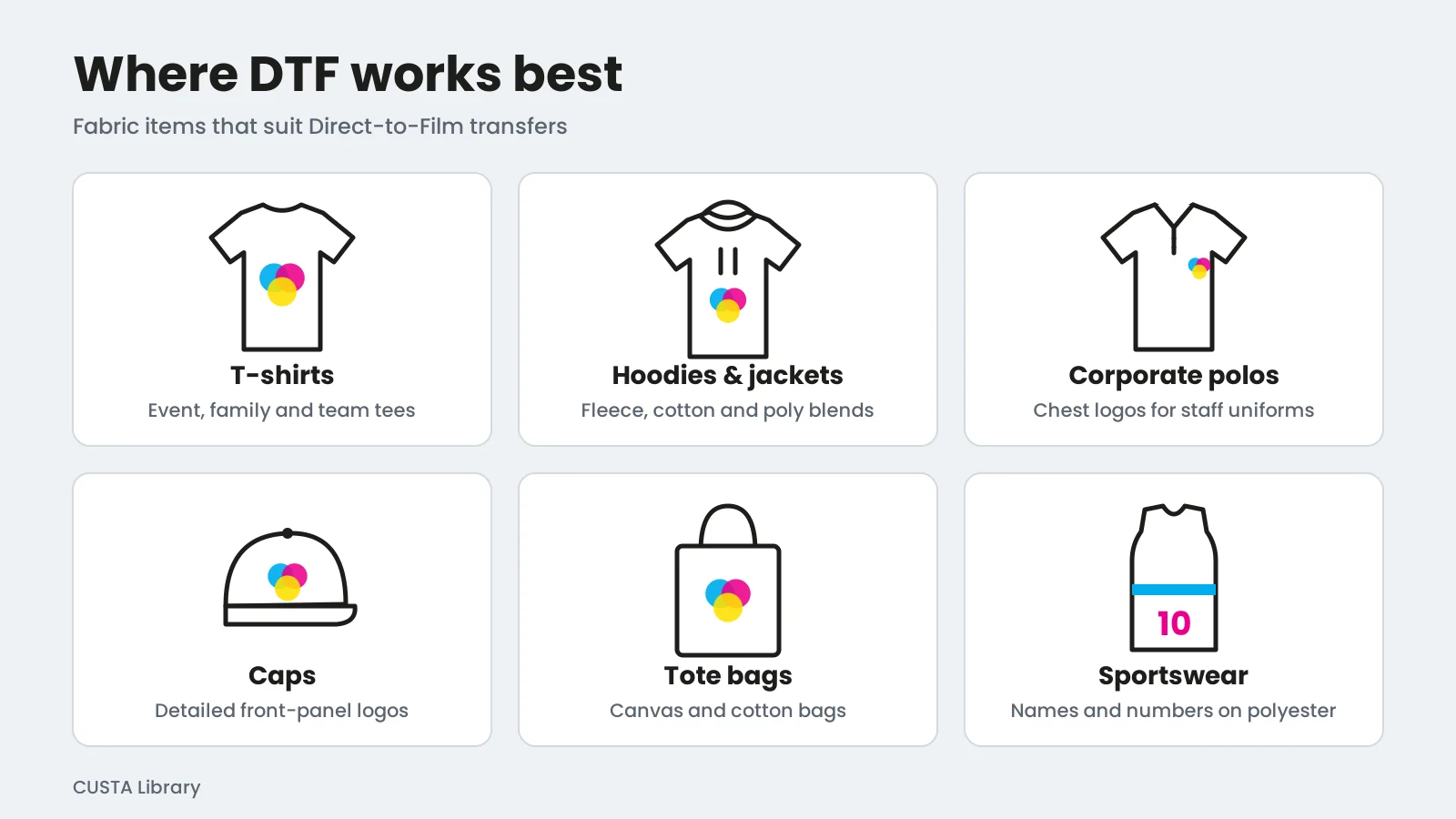
Whether it’s a sports team, a family reunion or a company event, DTF shines on t-shirts. Colourful logos and artwork come out crisp, and the prints stay vibrant wash after wash. Not sure which shirt to pick? Read about the different types of t-shirts.
For polo shirts and corporate wear, DTF reproduces detailed chest logos consistently across every size and fabric, keeping your brand looking the same on the whole team.
Hoodies, caps and tote bags for events and giveaways all take DTF well, so one design can run across a full merchandise set. Our tote bag printing guide has more tips.
DTF is efficient for smaller runs. Unlike screen printing, which needs a set-up for each design, DTF lets you print short batches affordably. It’s perfect for testing new ideas, limited editions or quick orders.
Names, numbers and sponsor logos press cleanly onto polyester jerseys, and each piece can carry a different name without slowing the job down.
Textile DTF is made for fabric, so it suits fabric items such as umbrellas and bags. For hard items like drinkware, pens and notebooks, methods such as pad printing are usually a better fit.
If you’re ready to make your designs pop with vibrant colours and lasting detail, CUSTA’s DTF printing services are here to help. Whether you need a handful of custom t-shirts or a run of promotional hoodies, we’ll bring your ideas to life with precision and care. You can even start with our online design editor.
DTF stands for Direct-to-Film. Your design is printed onto a clear PET film, coated with an adhesive powder and then heat-pressed onto the garment.
DTF works on cotton, polyester, poly-cotton blends, fleece and many performance fabrics, in both light and dark colours. Unlike DTG printing, the fabric does not need pre-treatment.
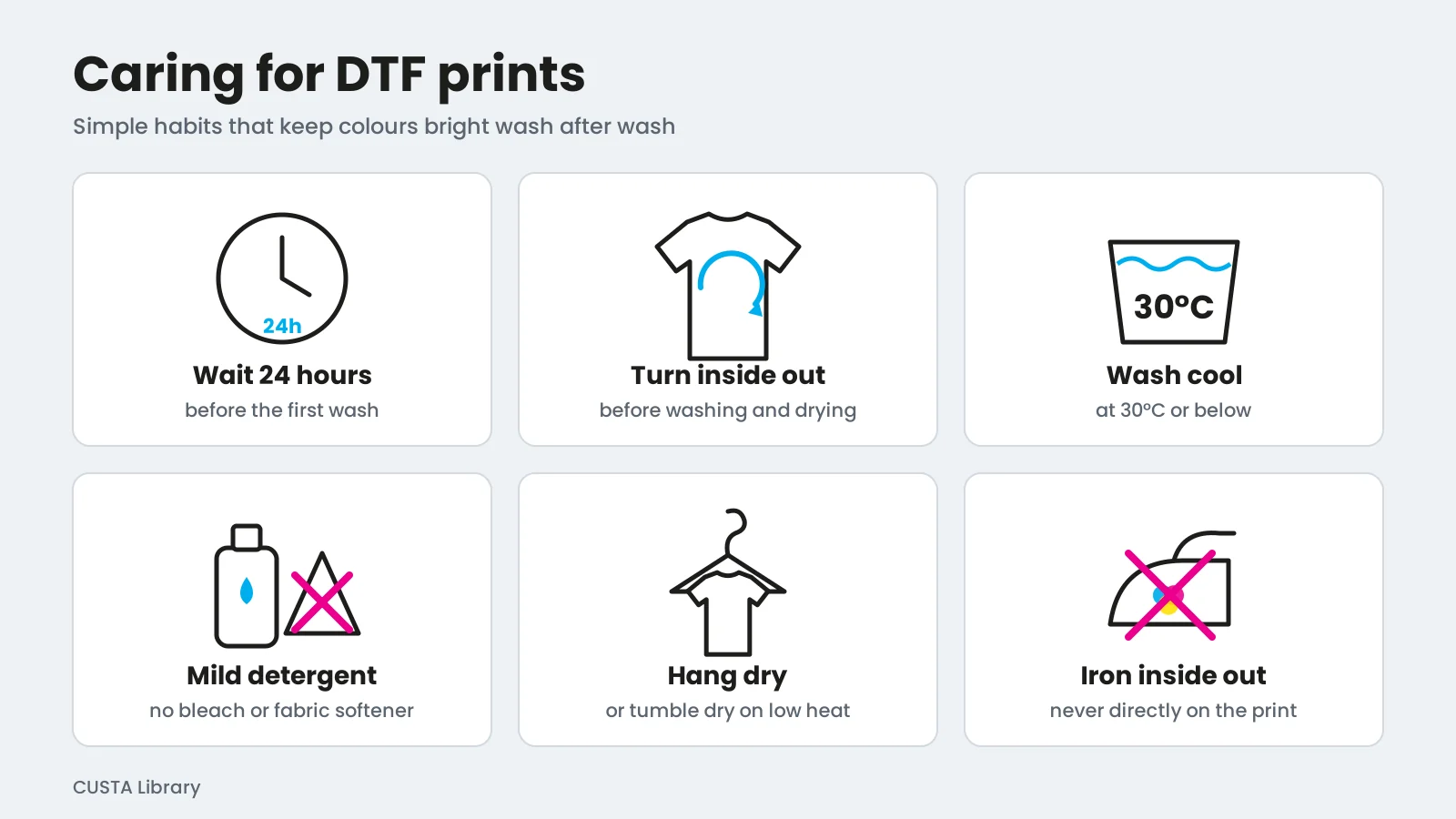
With good transfers, correct pressing and proper care, DTF prints stay bright and flexible through many washes. Washing inside out in cool water and avoiding high heat makes the biggest difference.
A well-pressed DTF print stretches with the fabric and resists cracking and peeling. Problems usually come from under-pressing, low-quality film or powder, or ironing directly on the print.
Yes. DTF needs no screens or per-colour set-up, so it is cost-effective for single pieces, samples and small to medium runs.
Yes. A layer of white ink is printed behind the colours, so designs stay bright on black, navy and other dark garments.
Neither is better in every case. DTF suits detailed, full-colour designs and smaller runs. Screen printing is usually more economical for large orders of simple one- to three-colour designs.
Sublimation dyes the design into light-coloured polyester, so it has no feel at all. DTF sits on the fabric surface as a thin layer and works on cotton, blends and dark colours too.
No. Both use a heat press, but vinyl is cut from coloured sheets and is limited to simple shapes, while DTF is printed in full colour and is usually thinner and more flexible.

@ 2025 CUSTA. All rights reserved
CUSTA SDN. BHD. (Company Registration
No. 2023010003516 [1522349-U])